

Buddy Williams - Showman and Australian Music Icon
A glimpse into the remarkable life and legacy of one of Australia's true originals.
Step into the world of Buddy Williams - a trailblazer whose music carved a path through the rugged heart of Australia and into the soul of its people.
From humble beginnings to national acclaim, Buddy's journey is one of resilience, authenticity and artistic brilliance.
His songs didn't just entertain; they told stories.
Tales of bushmen and battlers, of wide-open plains and quiet country towns, of love, loss, and life.
With every lyric and melody, Buddy captured the essence of the outback, giving voice to generations and shaping the sound of Australian Country Music.
This website is a celebration of a man whose legacy echoes through time, in the voices of today's artists, in the hearts of devoted fans, and in the timeless recordings that continue to stir emotion and pride.
Whether you're a lifelong admirer, or discovering Buddy for the first time, we invite you to explore his remarkable journey.
Let his music guide you through the country the loved and the stories he lived.


EARLY LIFE & MUSICAL AWAKENING

On a spring day on Thursday, the 5th of September 1918, in the working-class Sydney suburb of Newtown, a baby boy entered the world.
His name was Harold (Harry) Taylor.
No fanfare, no family to greet him, just the uncertain air of a country at war and a future unwritten.
Within days of his birth, he was placed in the care of the Royleston Orphanage, Glebe Point in Sydney, a place that would shape his earliest memories.
On one occasion, when he ran away from the orphanage, he befriended a stray dog, and they kept each other warm on a freezing Sydney night.
This experience inspired him to later write his heartfelt song “The Orphan Boy and his Dog”.
Around the age of seven, Harry was adopted by Alec (Bandy) and ** Cleve McFarland, dairy farmers from Dorrigo on the north coast of New South Wales.
At first, it seemed like a chance for a fresh start, but it soon became clear that the McFarland’s interests lay not in nurturing a child but in acquiring unpaid labor.
It was not uncommon during the depression and post-depression era when rural child exploitation was a harsh reality.
** There is discussion regarding the name Cleve, Buddy's family say they recall him referring to her as Cleve.
Harry was expected to work long hours on the farm, rising before dawn to tend cattle, fence, chop wood or do fieldwork before and after walking to school.
Affection was scarce and discipline was harsh.
Life with the McFarland's in Dorrigo was not just hard; it was brutal.
Discipline came not with words, but with the **whop (whip).
The physical punishment left Harry with lifelong scars.
He slept in the shed with the dogs for company and warmth.
The bed was made of hay covered with old newspapers, and hessian bags for blankets.
Each night, young Harry’s meal was humble, just bread dipped in dripping, or bread with jam.
Yet somehow, he made it through hunger and the hardship.
He pressed on with quiet resilience, laying the foundation for a life that would one day echo across the country in song.
** Bandy Mc Farland was Irish and pronounced Whip as Whop
Inspired by his favorite singers, Jimmie Rodgers and Goebel Reeves who he listened to on a neighbour's old gramophone; music became his refuge, the hills of Dorrigo his stage and the animals his audience.
His strong, clear and plaintive, voice began to carry the stories of the land, the battlers, and the broken hearted.
Years later when he sang of hardship, abandonment and resilience, it wasn’t a performance; it was testimony.
His songs carried the weight of lived experience, and listeners heard it.
They felt it.
At age fifteen, Harry escaped the McFarland farm for good, driven by a fierce determination to escape the exploitation, cruelty, and gnawing hunger that had shadowed his life.
The local police, aware of his circumstances, chose compassion over protocol, agreeing to turn a blind eye as long as he remained employed.
On his first day of freedom, he walked twenty miles to the town of Ebor, NSW, where he landed a job digging spuds (potatoes).
From there, he set off again, this time to Tyringham, a small rural town situated in the northern region of NSW, where he worked felling timber for the mills.
His journey then took him to the rugged Buccarumbi Range, (spelt as Buckerumby in old newspaper clippings) roughly 50 kilometres southwest of Grafton NSW, where he drove bullocks and hauled timber.
It was there that he bought a dapple-grey bronco, a horse that would later inspire one of his breakout songs;
That Dapple Grey Bronco of Mine

Buddy c. 1934

Buddy c. 1938
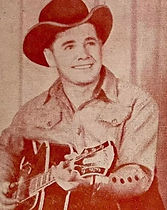
Buddy c. 1945
After leaving the range, Harry travelled to Gordonbrook Station, a historic cattle station located high above the Clarence River in northern NSW.
There, he worked as a general hand, jackaroo, and boundary rider.
It was at Gordonbrook that he made a bold decision: to teach himself to yodel.
At first, the other station hands thought his yodelling was awful, but Harry was nothing if not persistent, and with time and practice, his nightly sessions drew curious listeners to his hut to listen to him sing and yodel.
Determined to go further, he sent to Sydney for a guitar and an instruction booklet, teaching himself to play.
Once he was able to sing, yodel and play, he quickly became very popular among the blokes on the station.
It is thought that it may have been here, that the other station hands began calling him "Buddy" a familiar bush term much like mate.
After leaving the Station he jumped a rattler, (train) and got a job working at a quarry in Coffs Harbour NSW.
One of his quarry workmates dared him to try busking (singing on the street).
Not one to shy from a dare, Buddy decided to give it a go, and to his amazement, in a few hours he'd collected £13/7/6.
This was a small fortune in pre-war, depression ridden, New South Wales.
Buddy said it was the most money he had ever seen.
In 1936, at eighteen years of age, Harry’s gift found its first spotlight at the Jacaranda Festival in Grafton.
His heartfelt performances led to an invitation to sing live on local radio station 2GF, where listeners responded with enthusiasm and encouragement.
Later, buoyed by this recognition, the young Harry chose to leave behind the name Harry Taylor.
The McFarland surname was one he never accepted or identified with.
He became known as Buddy Williams – ** The Yodelling Jackaroo, a name that would carry the sound of the Australian bush to audiences across the nation and into history.
Buddy’s unique pick‑and‑strum style, paired with his strong, clipped enunciation, gave his sound a character that was instantly recognizable.
His influence crossed genres, shaping musicians far beyond country, and his legacy continues to inspire new generations.
** In later years The Yodelling Jackaroo was replaced by The Singing Cowboy, and then both taglines were dropped to simply Buddy Williams
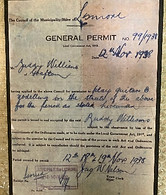
Busking Certificate 1938
RISE TO FAME


Buddy in the 40s
The Yodelling Jackaroo

COMMERCIAL RECORDING DEBUT
A landmark moment in Australian recording history came on Thursday, September 7th, 1939, when Buddy stepped up to the microphone and recorded his first commercial session for Regal Zonophone, becoming the first Australian-born artist to launch a lifelong country music career.
The session featured six songs released on three 78rpm discs:
That Dapple Grey Bronco of Mine / They Call Me the Rambling Yodeller (G23854)
Lonesome For You Mother Dear/ Give a Little Credit to Your Dad (G23855)
The Orphan’s Lament / My Moonlight Lullaby (G23856)
Prior to this, Buddy had privately recorded two songs for radio distribution:
They Call Me the Clarence River Yodeller and Where the Jacaranda’s Bloom
The first of these was later reworked for his commercial debut titled
They Call Me the Rambling River Yodeller.
In 2007 Give a Little Credit to Your Dad was placed on the National Film & Sound Archive of Australia's
"Sounds of Australia".
It is the NFSA's annual capsule of iconic audio moments, honouring recordings that have resonated deeply with communities and audiences across the country.
Buddy's entry was one of the first ten songs added to the registry in its first year.
The genre's nomenclature underwent a transformation from its original designation as Hillbilly Music, progressing through stages as Cowboy Music and Country and Western Music, culminating in its contemporary identity as Country Music.
Numerous entries have since been added across all music genres.
When WWII restricted his ability to record and tour, his music still built a devoted fanbase.
Regal Zonophone released forty-eight Buddy Williams songs by 1945, thirty of which were Bush Ballads.
In all, Buddy recorded 120 sides for Regal Zonophone.
In August 1958, Buddy cut his first recordings for EMI's Columbia Label.
He recorded forty-six sides for release on singles and ten tracks for release on LP (long play) for Columbia between 1958 and 1964.
In 1965, Buddy's friend and A&R Manager Ron Wills moved from EMI to RCA, and Buddy transitioned with him.
His first RCA session was on Friday, the 15th of January 1965.
Buddy's style evolved over the years, and he continued to sing solo with his own guitar accompaniment until the mid-sixties.
In late 1965, Buddy started recording with a band.
Thirteen albums were released on RCA between 1965 and 1972.
He is commonly recognised as one of the originators of the Bush Ballad in Australia.

A SOLDIER'S SACRIFICE - A MUSICIAN'S RETURN
On Monday, the 14th of September 1943, in Paddington NSW, Buddy Williams paused his rising music career to enlist in the Australian Imperial Force (AIF) the Australian Army.
Buddy's battalion, and many others, some 33,000 men were sent to Balikpapan in Borneo to participate in Operation Oboe Two.
It was an amphibious landing, and due to underwater sandbars and heavily mined waters; the troop barges were prevented from getting to the beach.
The soldiers had to jump into the ocean with their rifles above their heads and wade ashore, making for a very trepidatious journey to land.
Tragically, many did not make it as the soldiers came under heavy Japanese fire while struggling through the water toward shore..
Buddy served as a Bren gunner in the 2/31st Battalion, 7th Division Don Company, demonstrating the same grit and courage that had defined his early life.
Then, on Monday, the 3rd of July 1945, during the Battle of Balikpapan in Borneo, Buddy was severely wounded by a hand grenade blast that tore through his stomach, arm, and leg.
The injuries were catastrophic; he was unconscious for nine days and was not expected to survive, but Buddy defied the odds.
He was awarded three service medals, one of which was the Pacific Star.
Though left with lifelong injuries, after recovery, he returned home and resumed his music career with unwavering determination.
There is an account of Buddy's wounding in the book "Forever Forward": The History of the 2/31st Australian Infantry Battalion, 2nd AIF by John Laffin.
BUILDING A CAREER IN A POST-WAR NATION
After returning from World War II, Buddy stepped back into the recording studio with renewed energy and determination to continue his musical career.
During this period, he recorded duets with Lenore Miller (later Lenore Somerset), who became his niece after marrying Grace.
Their session was promoted as one of the finest examples of Hillbilly music' of its day and featured the songs:
Brown Eyed Sweetheart of Mine
The Bushman’s Rodeo
The Drover’s Song
Where the Lazy Murray River Rolls Along
Bushland Paradise
Rhythm in The Saddle
Buddy also went on to star in a short film He Chased a Chicken produced by Roy Darling,
performing:
The Overlander Trail
The Chicken Song
Dear Little Lady of Mine - this song was never recorded
There were discussions about Buddy being cast in the movie "The Overlanders" with Chips Rafferty.
However, the outbreak of WWII prevented talks from going any further.


Buddy and another soldier being loaded onto the hospital ship Wanganella

Buddy's Medals
Buddy's Enlistment Photo 1943
THE LADY BEHIND THE LEGEND
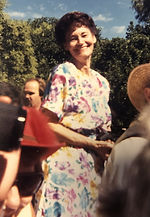
Buddy Williams met Grace Maidment, a vivacious young woman from Tolga, a small town nestled in the Atherton Tablelands of Queensland.
Grace was waiting tables at the Barron River Café in Atherton, a lively hub for servicemen on leave.
She recalled the day Buddy and his entourage swept into the café with great fanfare.
The other waitresses, visibly excited, asked if she knew who he was “I wouldn’t have a clue “she replied.
One of the girls leaned in and whispered “that’s Buddy Williams the famous cowboy singer".
Feeling flustered, Grace approached his table and greeted him as Mr. Snow, the only country singer she’d ever heard of, referring to Hank Snow, the well-known Canadian American singer.
Buddy responded with a cheeky grin and said, “Williams is the name—Buddy Williams.”
From that moment on, he became a regular at the café whenever he was on leave.
Grace admitted she didn’t know anything about country music.
A ballroom dance demonstrator, her musical tastes leaned in a completely different direction.
Yet, despite their contrasting interests, a deep connection blossomed; founded on mutual admiration, shared values and unwavering devotion to one another.
On Friday, the 31st of January 1947, Buddy and Grace were married.
Their bond was enduring.
Buddy described Grace as his stalwart, his anchor, and “the best mate a man could ever have.”
Together they raised four children: Donita, Harold, Kaye, and Karen.
Music flowed through the family like a river.
Harold, Kaye, and Karen all performed alongside Buddy in his stage shows and at other venues, proudly continuing the legacy he had built.
Harold and Kaye went on to make their own recordings, each developing a sound of their own.
Karen contributed backup vocals on some of her dad’s albums, adding harmony to his iconic sound.
Their family story, though rich with music and love, was not without sorrow.
Donita, the eldest, affectionately known as Neatie was tragically struck by a rodeo truck while Buddy and Grace were on tour in Scottsdale Tasmania.
She was rushed to the hospital but passed away soon after.
Her loss left a permanent ache in their hearts.
Once again, Buddy turned to music, the only language that could hold the weight of his sorrow.
From that pain came three deeply personal songs:
There's Another Angel in Heaven
The Little Red Bonnet
Our Baby Girl
These songs became more than just recordings—they were acts of remembrance, etched in melody and memory.
For Buddy and Grace, they were a way to keep Neatie closer.
For listeners, they became anthems of love, loss, and the enduring bond between parent and child.

Buddy and Grace 1947




The Yodelling Cowboy
Buddy and Grace c. 1950s
RECOGNITION AND LEGACY
Some highlights of Buddy’s career.
★ 1940: Toured with Thorpe McConville’s Wild Australia.
Performed at Sydney’s Theatre Royal alongside Roy (Mo) Rene and Evie Hayes.
Performed an eight-week engagement at Brisbane’s Theatre Royal.
★ 1954: Purchased Rolls Royce.
★ 1963: Presented with a Gold Record. At Buddy's height of fame, there was no such thing as Gold Records, he likely would have received many.
★ 1965: Moved from EMI to RCA records.
★ 1972: Teamed up with Tex Morton for The Town & Country Show.
They recorded a historic single I Like Country Music
Well known Canadian singer Wilf Carter recorded some of Buddy’s compositions on his album
Wilf Carter Sings Songs of Australia.
★ 1973: Performed at Sydney’s Hordern Pavilion for a UNICEF concert.
★ 1977: Inducted into The Roll of Renown
Inducted into the Hands of Fame
★ 1978: Buddy was the subject of the documentary The Last Fair Dinkum Outback Australian Entertainer narrated by John Singleton, an advertising executive and well-known broadcaster.
★ 1979: Received a gold-plated map of Australia from RCA to commemorate 40 years of recording and touring.
★ 1980: Won a Gold Guitar for The Heritage Award.
★ 1981: Presented with the keys to the city of Warwick and made an Honorary Citizen for his song
Heading for the Warwick Rodeo.
A bronze bust of Buddy was erected by Tamworth City Regional Council in Bi-Centennial Park, becoming the first statue installed in the park. Many others have followed.
★ 1985: The original Our Buddy album was released.
The album was later re-worked to include other tracks; including John Williamson’s tribute song to Buddy The Last of the Pioneers.
Inducted into Rocky Page’s Hall of Fame and Avenue of Honor.
★ 1986: Honored with a Commemorative Tribute Show at the Golden Guitar Awards.
One of his last shows was on Anzac Day, a 2TM/4WK promotion.
The compere was John Minson - “Mr. Hoedown”.
Special guest was Arch Kerr, Regal Zonophone’s A&R Manager who first recorded Buddy in 1939.
British radio personality Paul Hazell travelled to Australia and recorded historic footage of Buddy talking about his career.
Some of this material was used to compile the double CD set Warren Fahey presents Yesterday’s Australia.
★ 1987: Received the Songmaker Award posthumously.
★ 1988: A tribute show Under Western Skies was created and performed at Pixieland in Tamworth by renowned fiddle player Pixie Jenkins.
★ 2007: The Sounds of Australia were announced by the National Film & Sound Archive.
The first round included Buddy's 78 recordings;
Lonesome for You Mother Dear
Give a Little Credit to Your Dad" RZ G23855
★1993: Awarded a further Songmaker Award accepted by Grace on his behalf.
★ 2018: Don Dorrigo & Guy Fawkes Historical Society honoured Buddy's centenary with a special tribute concert,
culminating in the unveiling of a memorial stone by local MP Melinda Pavey, event organizer Georgie Frogley and Karen Williams.
★ 2024: Buddy’s refurbished bronze bust was given pride of place in Tamworth's Pioneers Parade, Bicentennial Park, and unveiled by Mayor Cr Russell Webb.
Buddy’s grandson, Scott Parker, honoured his grandfather's legacy by performing Buddy's songs at the unveiling of the refurbished bust.
THE FINAL BOW
Buddy Williams passed away on Friday, the 12th of December 1986, following a long and courageous battle with lung cancer.
He suffered a massive heart attack and was laid to rest at Lutwyche Cemetery in Brisbane Queensland.
Grace had always been the heart beside Buddy’s music.
During the war years he wrote his well-known song “Brown Eyed Sweetheart of Mine” for Grace.
Its words carried his devotion across distance and hardship, a melody of love, longing, and promise that bound them together:
The lines were more than lyrics; they were Buddy’s love letter set to song, a reminder that his heart was always with her.
Grace Williams passed away on Saturday, the 14th of January 1995 from uterine cancer.
Buddy and Grace are interred with their beloved daughter Donita, at Lutwyche Cemetery in Brisbane Qld.
Plot MON - 10-73A-14
A father, a mother, a child, bound forever in memory, loyalty, and song.
The voice is silent, the smile eternal, the circle unbroken.


EPILOGUE
His music and influence live on.
His songs continue to endure and inspire, and his pioneering spirit remains a cornerstone of Australian Country Music.
He is remembered not only as a performer and showman, but as a trailblazer whose influence can be heard in every heartfelt lyric, every dusty road travelled, and every artist who sings the stories of the land.
Though the man is gone, his voice still echoes through the songs, the stories and the melodies in Australia and beyond.
He is widely celebrated as a foundational figure in Australian Country Music.
For further information regarding topics mentioned in this Biography, please visit the INSIGHTS section on this website.
ACKNOWLEDGEMENTS
This tribute to Buddy Williams is a testament to collective memories, generous contributions, and heartfelt support from individuals across the nation and around the world.
Our Gratitude
✦ Garry Coxhead ✦ Eric Bogle ✦ Andrew Smith ✦ Cliff Hudson ✦ Llewellen Weeding ✦ Paul Hazell ✦ John Heap ✦ John Williamson ✦ Ray Kernaghan ✦ Tommy Emmanuel ✦ Chad Morgan ✦ Shaza and Lindsay Butler ✦ Dean Perrett ✦ Kathy and Bill Kettle ✦ Alyce Simmonds ✦ Ellen‑Lee Osterfield ✦ Frank Ifield ✦ Lorraine Edwards ✦ Georgie Frogley ✦ Slim Dusty ✦ Sarah Edwards ✦ Jodie Lisale ✦ Kanwal Shaikh ✦ Scott Parker ✦ Pixie Jenkins ✦ Ashley Cook ✦ Janice Strain ✦ Buddy Weston ✦ Tom and Ted Legarde ✦ Buck Carson ✦ Burt Newton ✦ Johnny Ashcroft ✦ Gay Kayler ✦ Alan Hawking ✦ Smoky Dawson ✦ Nev Nicholls ✦ Heather McKean ✦ Shirley Thoms ✦ Gordon Parsons ✦ Kevin King ✦ Rocky Page ✦ Nick Erby ✦ George Daisey ✦ Ron Wills ✦ Barbara Morison ✦ Arch Kerr ✦ Eric and Hilary Scott ✦ Irene Morison ✦ Norm Bodkin ✦ Joan Wright ✦ Lenore Somerset ✦ Mike Munroe ✦ Sony Music ✦ Peter Fenton ✦ Tania Kernaghan ✦ The Williams Family ✦
Gallery Credits
★ Mike Bagnell (his distinctive lens preserving Australia's country music legacy)
★ Garry Coxhead (capturing history)
★John Maloney (restoration and colourisation of vintage photographs) ★ Smoky Dawson
★ Johnny Ashcroft ★ Gay Kayler ★ Alan Hawking ★ Nev Nicholls ★ Heather McKean ★ Shirley Thoms ★ Kevin King ★ Gordon Parsons
★ Ellen‑Lee Osterfield ★ John Heap ★ Lynne Cary ★ John Williamson ★ Slim Dusty
★ Dean Perrett ★ Reg Lindsay ★ Tex Morton ★ Georgie Frogley
★ Don Dorrigo & Guy Fawkes Historical Society ★ Cliff Hudson ★ Shaza & Lindsay Butler
★ Kathy Kettle ★ Andrew Smith ★ Scott Parker ★ The Country Music Hall of Fame
★ Members of the public ★ The Williams Family ★
Share Your Story
We invite you to help preserve Buddy's legacy.
If you have photographs, anecdotes, memories, or personal reflections, we'd love you to share them with us via our CONTACT PAGE on this site.
★ We reserve the right to review and edit contributions if necessary.